The economic benefits are modest, the environmental claims are unverified, and the strain on grids and water is real
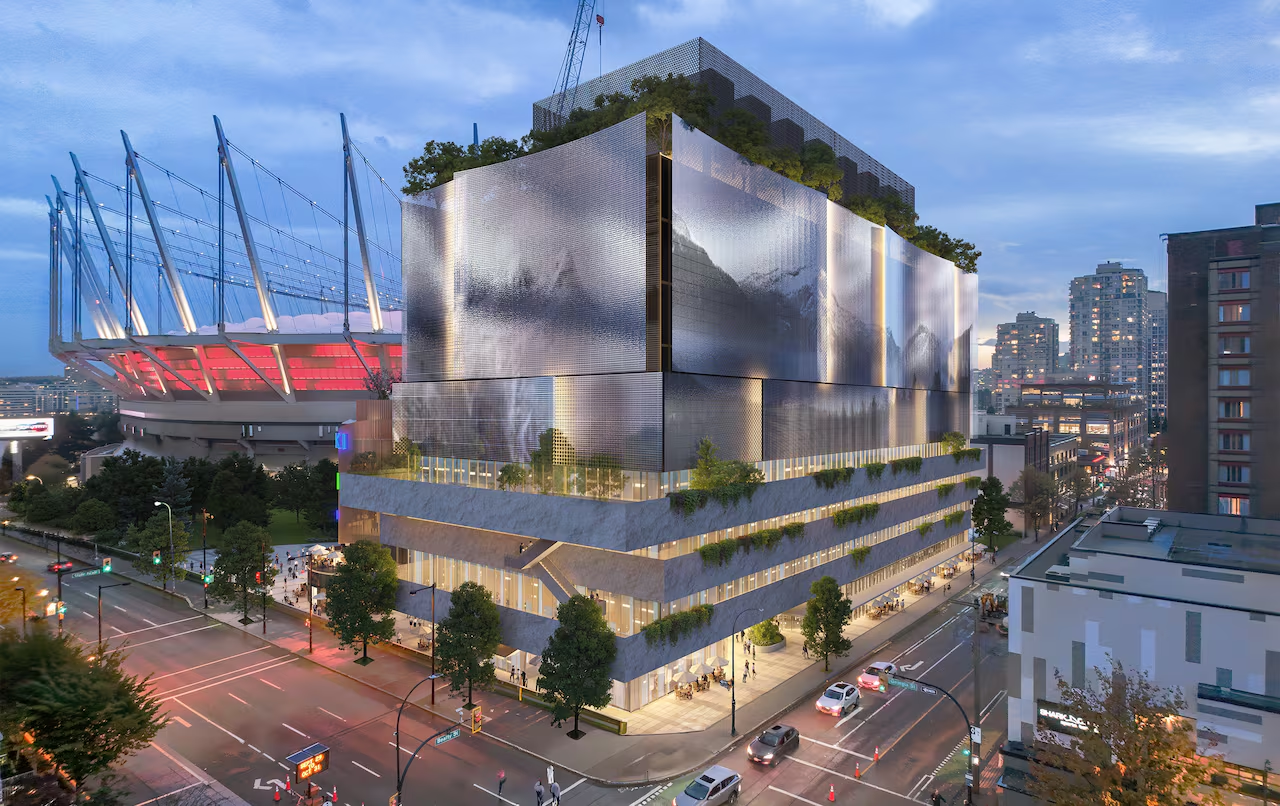
On Sunday, hundreds of people marched through the streets of Vancouver to protest two new AI data centres Telus is building in the city — which has just announced water restrictions with more expected in June.
Ottawa has pledged some $925 million over five years to build “sovereign AI data centres” across the country, and this month it named Telus as the first builder, to expand one facility in Kamloops and develop the two new ones in Vancouver. The case for a build-out rests on a belief that Canada needs more domestic compute or it will stay dependent on foreign infrastructure for something vital. But the case is weaker than it looks, and rests in part on an assumption about the future of AI that may turn out to be false.
AI Minister Evan Solomon says the goal is to ensure that “Canadian innovators, researchers and businesses have access to the compute they need,” while keeping “Canadian data… on Canadian soil.” We need far more domestic processing capacity to stay competitive as AI transforms the economy, and if we fail to build it ourselves, Canadians will become more dependent on foreign entities for some of our most critical infrastructure.
There are reasons to question whether the current rush to subsidize and build these centres is good policy. The economic benefits seem limited once the centres are built. They place a further strain on electricity and water systems that are already stressed. And many of the environmental claims the companies make can’t be easily verified.
More crucially, the push to build a network of large, power-hungry AI data centres assumes that most of the AI we will be using in the years to come will still rely for the most part on large models we access in the cloud. I’ll offer reasons to be sceptical of this in my next post. This one lays out the build-out itself, and how much about it is still unsettled.
Canada already has a strong network infrastructure for internet traffic, with 285 data centres across the country, most near major urban centres and many run by the large cloud computing providers. The centres being built for AI are different. They deliver far greater compute or processing power, demand far more water and electricity, and run the latest high-end Nvidia chips designed to handle AI workloads at scale. Canada has only nine at present capable of delivering the 200 megawatts considered standard to support AI training and compute at scale, and it aims to build many more soon, coast to coast.
In response to the government’s invitation to fund new data centres, the AI minister’s office has received 160 applications from builders. Telus is the first to be approved. The centres it is expanding in Kamloops and building in Vancouver will offer a smaller capacity, with a combined power draw in the 150 megawatt range, as the Globe reports . Bell Canada is also in the game out here, with two facilities operating in Kamloops and nearby Merritt, and four more in the works , for a combined 500 megawatts.
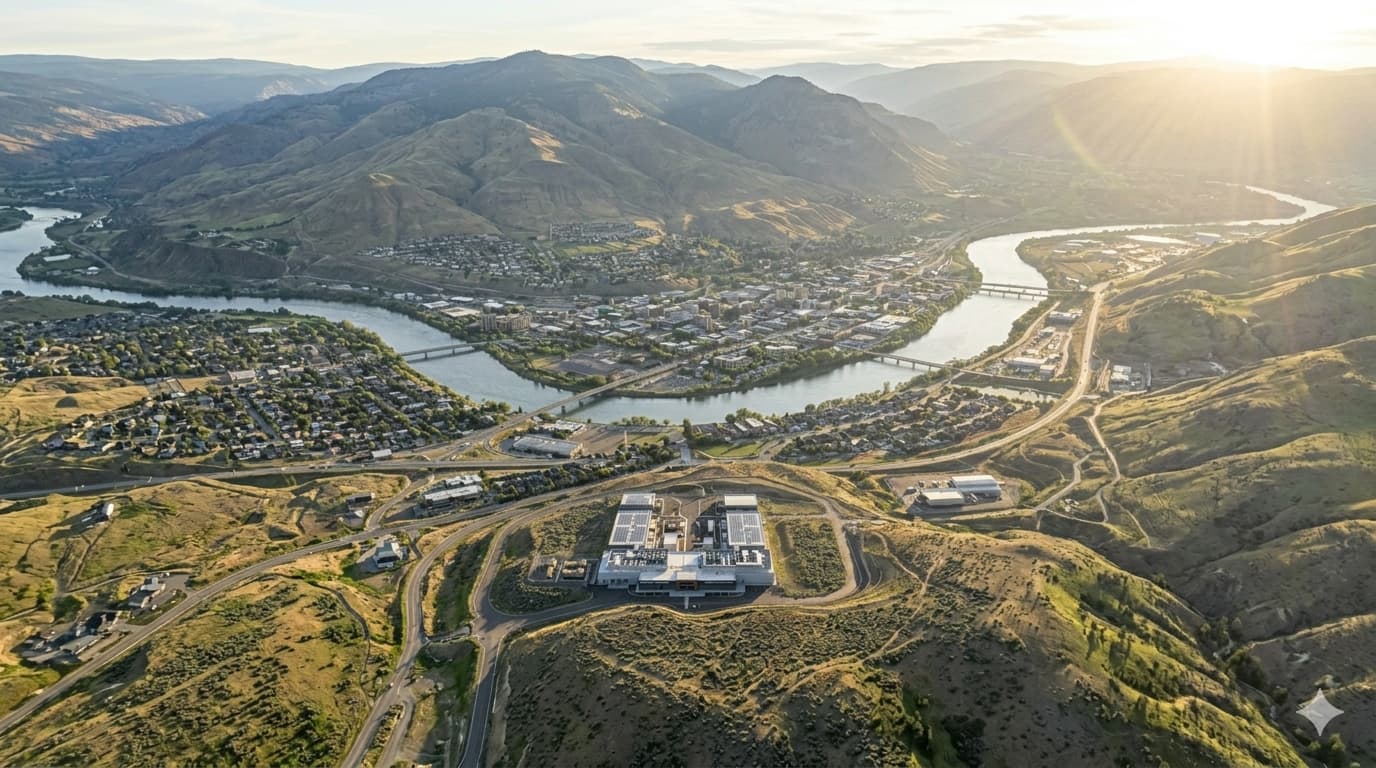
Telus and Bell make a strong case for hosting these centres locally. In Kamloops, Bell officials point to the dry weather, geological stability, and access to electricity as making for a more reliable place to process data. Local centres are also said to mean faster response times for AI queries. And building the centres will employ several dozen tradespeople.
Telus has claimed that its BC facilities will run on 98 per cent clean hydro power, recycle enough waste heat to warm 150,000 homes, and use 90 per cent less water than a conventional data centre, with plans to incorporate recycled water from B.C. Place stadium. Bell has made similar claims about its Kamloops facility, including the use of closed-loop cooling and district heating systems connected to Thompson Rivers University.
Yet there are reasons to be cautious about some of these claims.
Sceptics point out that data centres tend not to leave lasting economic benefits in the places that host them. A study in January found that as few as 23,000 people held permanent jobs at data centres across the entire U.S. as of 2024, representing 0.01 per cent of national employment, while the industry consumed more than 4 per cent of all electricity. The Kamloops numbers are consistent with that pattern. Bell’s first AI data facility at Mission Flats, built by 150 tradespeople , will employ only 15 people on an ongoing basis once it’s up and running.
The centres also place a strain on energy grids and water supply. B.C. Green Party leader Emily Lowan has raised concerns that a planned Nanaimo facility would draw tens of thousands of litres of water daily, and local watershed groups in Kamloops warn the centres there will worsen drought-cycle stress. Last year, Kamloops endured its warmest summer on record, with ten power outages hitting the city within two weeks.

Can we rely on the assurances from Telus and Bell about closed-loop cooling and using “renewable hydroelectricity” address these concerns? As Lowan points out , none of the BC projects have undergone environmental impact assessments. Bell and Telus make various claims about consumption — 90 per cent less water use, 98 per cent clean power — but we have no independent verification of them. And the province’s bidding process for the facilities now being planned or built hasn’t produced many published assessments.
B.C. Hydro itself is skeptical. CEO Charlotte Mitha fears that the power demands of these new data centres could overwhelm the grid. The province launched a competitive bid process in January 2026 capped at 400 megawatts over two years because, in Mitha’s words, the utility could “easily be overwhelmed” by AI requests if all were served as they arrived. The B.C. Conservatives counter that the real problem is that we don’t generate enough electricity, and with better management, we could. There is at least some evidence, then, that the data centre build-out could make our energy supply challenges greater.
The companies’ environmental claims may prove to be accurate, and the centres do create jobs and faster local service. But the case for the build-out overlooks the possibility that the way we use AI in the near future may look different from today. The policy assumes that AI will continue to depend primarily on large data centres, on much of our processing being done in the cloud.
The signs, however, point in a different direction. AI compute is becoming cheaper and more distributed. Within a few years, more of what we now send to the cloud may run on devices we already own. And if that’s where things are heading, we should be asking whether we’re building for today’s AI or for the AI we’re likely to see five years from now. ■
{To receive new posts by email, follow on Substack .}